Samarth's A Compendium of Multiple Choice Questions for Judicial Service Examinations (Volume 2) - 6th Edition 2026
| Author : | SHREYA BHARGAVA, SAMARTH AGRAWAL |
|---|
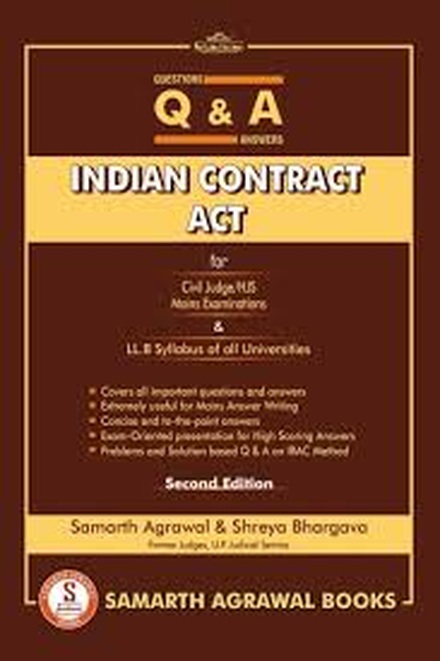
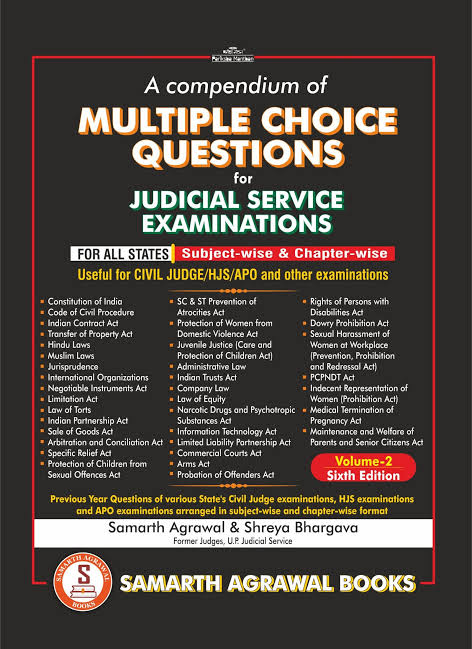
| Samarth Agrawal's A Compendium of Multiple Choice Questions for Judicial Service Examinations, Volume 2, Sixth Edition, by Samarth Agrawal and Shreya Bhargava, both former Judges of the U.P. Judicial Service, is a subject-wise and chapter-wise bank of more than 6,500 previous year objective questions drawn from about 30 Civil Judge, Higher Judicial Service and APO examinations across 20 States, with similar questions clubbed to remove repetition. Volume 2 covers the Constitution of India, Code of Civil Procedure, Indian Contract Act, Transfer of Property Act, Hindu and Muslim Laws, Jurisprudence, International Organizations, Negotiable Instruments Act, Limitation Act, Law of Torts, Indian Partnership Act, Sale of Goods Act, Arbitration and Conciliation Act, Specific Relief Act, POCSO, SC & ST Prevention of Atrocities Act, Protection of Women from Domestic Violence Act, Juvenile Justice Act, Administrative Law, Indian Trusts Act, Company Law, Law of Equity, NDPS Act, Information Technology Act, Limited Liability Partnership Act, Commercial Courts Act, Arms Act, Probation of Offenders Act, Rights of Persons with Disabilities Act, Dowry Prohibition Act, Sexual Harassment of Women at Workplace Act, PCPNDT Act, Indecent Representation of Women Act, Medical Termination of Pregnancy Act and the Maintenance and Welfare of Parents and Senior Citizens Act. English. |


1023

English

6th Edition 2026

Tags: MCQ Papers for Judicial, APO Exam, All State Civil Judge Examination, All State Higher Judicial Service (Pre)Exam
Samarth Agrawal's A Compendium of Multiple Choice Questions for Judicial Service Examinations — Volume 2, Sixth Edition by Samarth Agrawal and Shreya Bhargava, both former Judges of the U.P. Judicial Service, published by Samarth Agrawal Books, is a subject-wise and chapter-wise bank of previous years' objective questions from State Civil Judge, Higher Judicial Service and APO examinations. English.
The Preliminary stage of every judicial service examination is won on breadth and accuracy under time, and the only material that reliably predicts it is what the commissions have already asked. This compendium is built from exactly that: more than 6,500 multiple choice questions drawn from roughly 30 examinations across 20 States, sorted first by subject and then by chapter, so a candidate revising the Transfer of Property Act can work through every question ever set on it rather than meeting them scattered across thirty papers.
The authors have also done the unglamorous work of de-duplication. Commissions repeat themselves heavily, and an unedited question bank is mostly the same question in thirty costumes. Similar questions here are clubbed, so the count reflects distinct testable points rather than volume for its own sake.
Volume 2 carries the civil and allied subjects together with the special and minor Acts — the half of the syllabus candidates most often leave until it is too late.
Key Features
- Sixth Edition, Samarth Agrawal Books
- More than 6,500 multiple choice questions across 25 subjects
- Questions taken from about 30 examinations in 20 States
- Subject-wise and chapter-wise arrangement throughout
- Similar questions clubbed to remove repetition
- Previous year questions from Civil Judge, HJS and APO examinations
- Written by two former Judges of the U.P. Judicial Service
- Useful for all States · English
Subjects Covered
Constitutional and Administrative Law. Constitution of India and Administrative Law.
Civil Procedure and Limitation. Code of Civil Procedure and the Limitation Act.
Contract and Commercial Law. Indian Contract Act, Sale of Goods Act, Indian Partnership Act, Limited Liability Partnership Act, Negotiable Instruments Act, Company Law, Arbitration and Conciliation Act and the Commercial Courts Act.
Property, Trusts and Equity. Transfer of Property Act, Specific Relief Act, Indian Trusts Act and the Law of Equity.
Torts and Jurisprudence. Law of Torts, Jurisprudence and International Organizations / Public International Law.
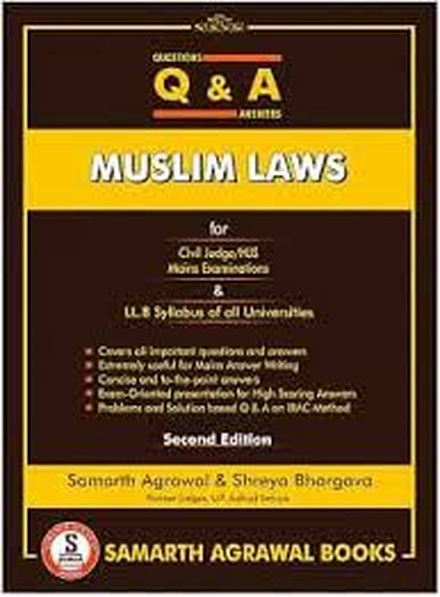
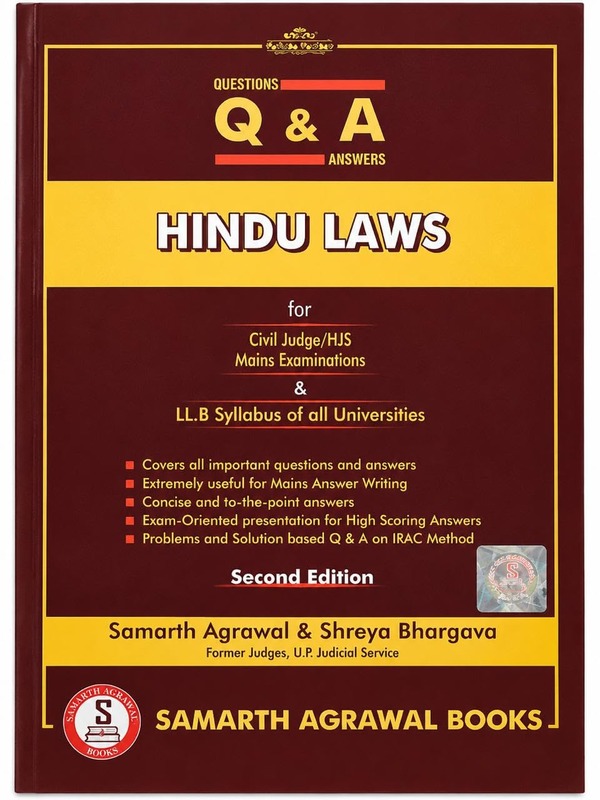
Personal Laws. Hindu Laws and Muslim Laws.
Women and Children. Protection of Children from Sexual Offences Act (POCSO), Juvenile Justice (Care and Protection of Children) Act, Protection of Women from Domestic Violence Act, Dowry Prohibition Act, Sexual Harassment of Women at Workplace (Prevention, Prohibition and Redressal) Act, Indecent Representation of Women (Prohibition) Act, Medical Termination of Pregnancy Act and the PCPNDT Act.
Social Welfare Legislation. SC & ST (Prevention of Atrocities) Act, Rights of Persons with Disabilities Act, and the Maintenance and Welfare of Parents and Senior Citizens Act.
Special and Minor Acts. Narcotic Drugs and Psychotropic Substances Act (NDPS), Information Technology Act, Arms Act and the Probation of Offenders Act.
Who Should Buy This Book?
- Candidates for Civil Judge (Junior Division) preliminary examinations in any State
- Higher Judicial Service aspirants
- APO, Assistant Prosecution Officer and public prosecutor candidates
- Candidates appearing in more than one State's examination, who need all-India coverage
- Judiciary coaching institutes and their faculty
- Law students beginning judiciary preparation during LL.B.
- Repeat candidates working on speed and accuracy rather than fresh reading
- Law college and coaching-centre libraries
Why Choose This Book?
The chapter-wise arrangement is what sets this apart from a stack of previous-year papers. Objective preparation works best when revision of a topic ends with every question ever asked on that topic; it works worst when questions arrive in the random order of an exam paper. This book is organised for the first way of working.
The second reason is coverage of the minor Acts. Candidates prepare the Constitution, the CPC and the Contract Act thoroughly and then lose marks on the Arms Act, the Probation of Offenders Act or the PCPNDT Act — which the commissions keep asking about. Volume 2 gives those statutes the same treatment as the major ones.
The third is the authorship. Both authors sat in the U.P. Judicial Service before writing, which shows in the selection: the questions chosen are the ones that discriminate between candidates, not merely the ones that are easy to set.