CLP's Law of Forensic Science - 2nd Edition 2023
| Author : | Dr. Ishita Chatterjee |
|---|
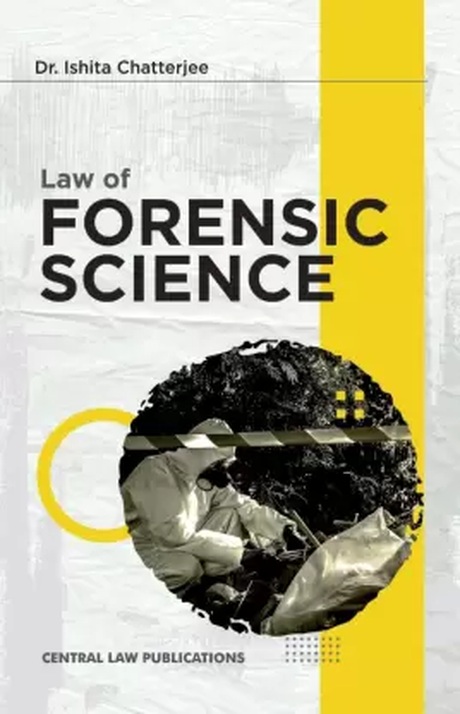
| A forensic science textbook written for lawyers and law students rather than for laboratory scientists, covering the LL.B. and LL.M. Forensic Science and Medical Jurisprudence syllabus in a single 490-page paperback. Dr. Ishita Chatterjee works through the place of forensic science in the justice delivery system, expert evidence and the evidentiary value of an opinion, medical opinion and its conflict with ocular testimony, the medico-legal aspects of injuries and wounds, the determination of death and post-mortem examination, identification by fingerprints and anthropometry, DNA evidence and DNA legislation, narco-analysis, polygraph and brain mapping with the self-incrimination question they raise, toxicology, the medical examination in sexual offence cases, medical negligence and the consumer remedy, human rights in medicine, mental health law, female foeticide and neuroscience — keeping the emphasis throughout on admissibility, proof and weight rather than on laboratory technique. 2nd Edition 2023, Central Law Publications. |


490

English

2nd Edition, 2023

Tags: Criminology & Penolgy with Victimology, Evidence Law, Forensic Science, Medical jurisprudence
Law of Forensic Science by Dr. Ishita Chatterjee, published by Central Law Publications, is a textbook written for law students and lawyers rather than for laboratory scientists. Second Edition, 2023, 490 pages.
Forensic science reaches the courtroom as evidence, and evidence is governed by law. That is the premise of this book and what separates it from a criminalistics manual. A lawyer does not need to be able to run a gas chromatograph; a lawyer needs to know what weight a medical opinion carries, when an expert's evidence can be acted upon without corroboration, what the court may do when the medical and ocular accounts conflict, and how a DNA report is proved. The treatment here is accordingly legal throughout, with the underlying science explained only as far as a non-scientist needs it to follow the argument.
This edition is written against the law of evidence as it now stands and covers the expert-evidence provisions, the proof of scientific reports and the questions of consent and personal liberty that arise when a court directs a medical or scientific examination. Dr. Ishita Chatterjee's title has been a standard reading on the Forensic Science and Medical Jurisprudence papers offered at Indian law schools since the first edition.
Key Features
- Written for lawyers and law students, not for forensic practitioners — the science is explained in plain terms and the emphasis stays on admissibility, proof and evidentiary value.
- Covers the whole Forensic Science syllabus as taught on the LL.B. and LL.M. curriculum at Indian universities.
- Case law throughout on the weight of expert and medical opinion and on the conflict between medical and eyewitness evidence.
- Treats the law, not just the technique — medical negligence, consumer remedies, human rights in medicine, mental health and DNA legislation are all dealt with as legal subjects.
- Accessible structure with each topic self-contained, suited to semester reading and to revision.
- 2nd Edition, 2023, 490 pages, paperback — a compact single volume at a student price.
Coverage
- Forensic science and its place in the justice delivery system: what forensic science is, the structure of the forensic laboratory system in India, and the role of the expert in a criminal trial.
- Expert evidence and the opinion of experts: who qualifies as an expert, the evidentiary value of an opinion, the need for corroboration, and the court's power to reject expert testimony.
- Medical opinion and its evidentiary value: how a medical report is proved, the examination of the medical officer, and the approach where the medical evidence contradicts the ocular account.
- Medico-legal aspects of injuries and wounds: classification of injuries, simple and grievous hurt, the nature of the weapon, ante-mortem and post-mortem injuries, and the age of an injury.
- Death and its forensic determination: the definition of death, brain-stem death, the signs of death, time since death, and the legal consequences that follow from each.
- Post-mortem examination: the purpose and procedure of autopsy, the post-mortem report as evidence, exhumation, and inquest.
- Identification: fingerprints, anthropometry, age and sex determination, superimposition and the identification of the dead.
- DNA evidence and DNA legislation: the scientific basis in outline, the proof of a DNA report, paternity and maternity disputes, the use of DNA in sexual offence cases, and the regulatory framework.
- Scientific investigation techniques: narco-analysis, polygraph and brain mapping, and the constitutional position on compelled testimony and the right against self-incrimination.
- Toxicology in outline: poisons and their medico-legal significance, the chemical examiner's report and its proof.
- Sexual offences: medical examination of the victim and of the accused, consent, and the evidentiary use of the medical findings.
- Medical negligence: the standard of care, criminal and civil liability, and the remedy before the Consumer Commissions.
- Human rights and medicine: consent to treatment, confidentiality, medical examination of arrested persons, and the rights of the patient.
- Mental health and the law: unsoundness of mind as a defence, fitness to stand trial, and the statutory framework for the mentally ill.
- Female foeticide and sex selection — the medico-legal and regulatory response.
- Neuroscience and emerging questions at the frontier of law and brain science.
Who Should Buy This Book?
- LL.B. and LL.M. students taking Forensic Science, Medical Jurisprudence or Criminology as a paper.
- Criminal trial advocates who must cross-examine medical officers and expert witnesses and want the legal position on evidentiary value at hand.
- Public Prosecutors and Assistant Public Prosecutors leading expert evidence.
- Judicial service aspirants, where the evidentiary value of medical and expert opinion is routinely examined.
- Judicial officers wanting a concise statement of the law on scientific evidence.
- Police officers and investigating officers on in-service training, and forensic science students needing the legal half of the subject.
- Medical professionals appearing as witnesses, and hospital legal cells.
- Law college and university libraries.
Why Choose This Book?
Most books on this subject come from one of two directions. Forensic science textbooks are written by scientists and treat the law as a footnote; medical jurisprudence treatises are written for doctors and assume a clinical background. A law student sitting a Forensic Science paper, or an advocate preparing to cross-examine a medical officer, needs neither of those. They need the subject organised the way the courtroom organises it — around what can be proved, by whom, and with what weight. That is how this book is built.
Its other merit is proportion. At 490 pages in a single paperback it is a book that can actually be read through in a semester and carried to court, and it is priced as a student text. For the money it covers a remarkable range: the classical medico-legal ground of injuries, death and post-mortem, and then forward into DNA legislation, narco-analysis and the self-incrimination question, medical negligence before the Consumer Commissions, mental health law and neuroscience. That breadth is what makes it serve both as a course book and as a first reference in practice.