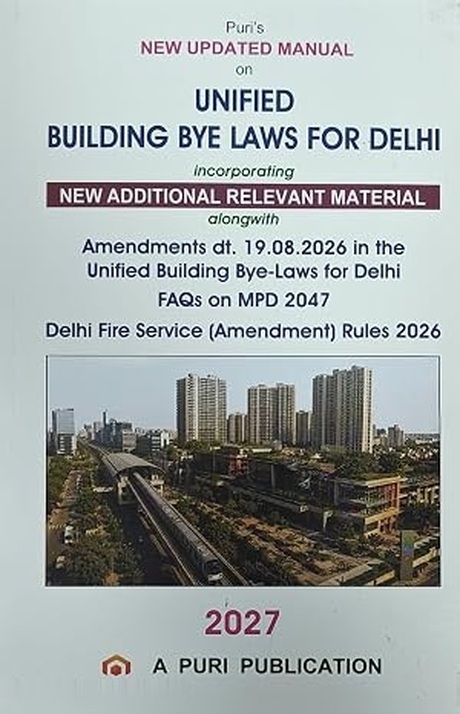
Puri's New Updated Manual on Unified Building- Edition 2027
| Author : | V.K. Puri |
|---|
| The current consolidated working manual on the Unified Building Bye-Laws for Delhi, 2016, incorporating the amendments dated 19 August 2026, FAQs on the Master Plan for Delhi 2047 and the Delhi Fire Service (Amendment) Rules, 2026, together with additional relevant material. Coverage runs through the definitions that govern every sanction, the procedure for sanction of building plans and the role of the registered architect and structural engineer, development control norms including ground coverage, floor area ratio, setbacks, height, basements and parking, the norms for residential, commercial, industrial and institutional use groups, plotted development, group housing and mixed-use premises, structural safety and seismic certification, fire protection and life safety with the fire NOC for high-rise buildings, services including water supply, drainage, rainwater harvesting and solar provision, barrier-free and accessibility norms, environmental and green building provisions, heritage and regulated zones, completion and occupancy certificates, and unauthorised construction, compounding, sealing and demolition, with the forms, schedules and appendices used in practice. 2027 Edition, A Puri Publication. |


Tags: Building Construction, Building Bye Laws, New Unified Building Bye Laws for Delhi 2016, Delhi Master Plan
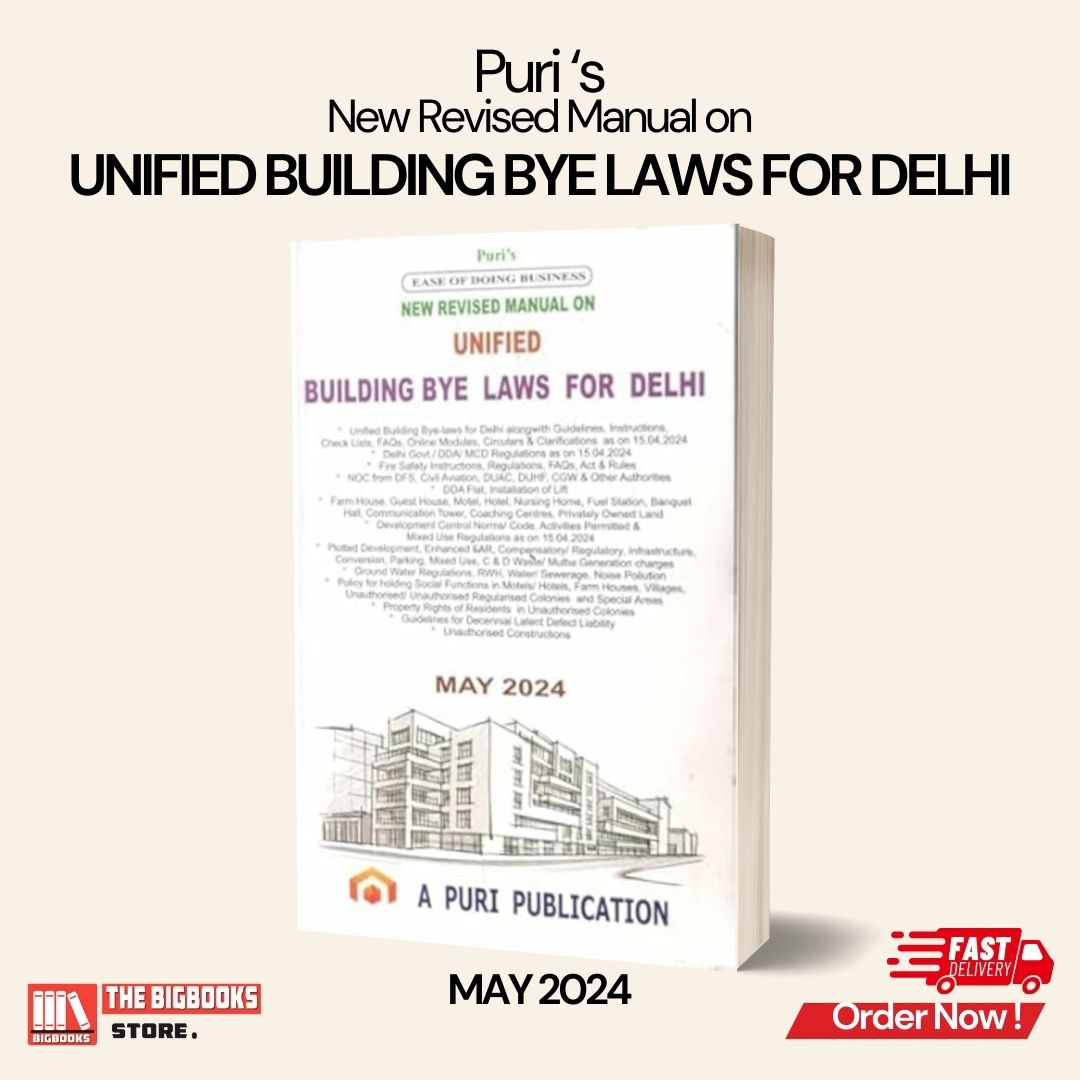
Puri's New Updated Manual on Unified Building Bye-Laws for Delhi, published by A Puri Publication, is the standard working manual on the building regulations that govern construction in Delhi. 2027 Edition.
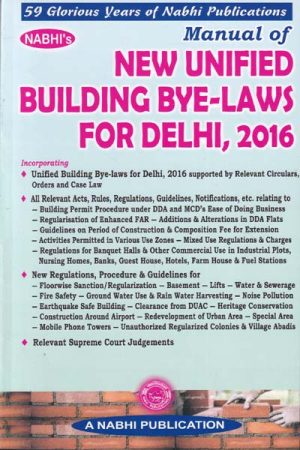
Anyone who builds, sanctions, certifies or litigates over a building in Delhi works from the Unified Building Bye-Laws, 2016. The difficulty is that the UBBL is not a stable document: it is amended by notification, supplemented by departmental circulars, and read alongside the Master Plan and the fire safety rules. A practitioner relying on a copy that is two years old is relying on provisions that may have been substituted. This edition exists to close that gap.
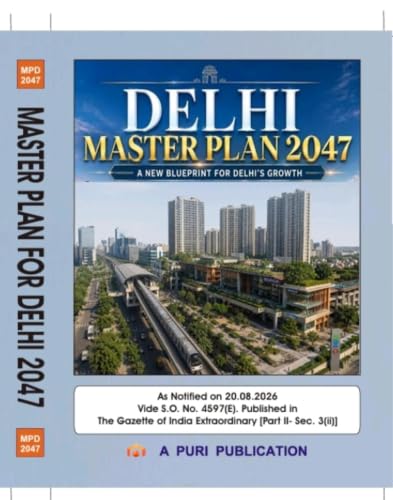
It incorporates the amendments dated 19 August 2026 to the Unified Building Bye-Laws for Delhi, FAQs on the Master Plan for Delhi 2047, and the Delhi Fire Service (Amendment) Rules, 2026, together with additional relevant material. MPD 2047 and the fire rules matter here as much as the bye-laws themselves: a sanction plan has to satisfy all three at once, and the questions that stall a file most often sit at the junction between them.
Key Features
- Incorporates the amendments dated 19.08.2026 to the Unified Building Bye-Laws for Delhi.
- FAQs on the Master Plan for Delhi 2047 — the practical questions on how MPD 2047 interacts with the bye-laws.
- The Delhi Fire Service (Amendment) Rules, 2026, without which no building above the prescribed height can be cleared.
- New additional relevant material beyond the bare bye-laws, collected for working use.
- The complete Unified Building Bye-Laws for Delhi, 2016 as currently in force.
- 2027 Edition — the current revision of a manual that is updated as the notifications issue.
- From A Puri Publication, long established in Delhi building and local-laws publishing.
Coverage
- The Unified Building Bye-Laws for Delhi, 2016 in full, as amended — the single code applying across the municipal bodies of Delhi.
- Amendments dated 19 August 2026, incorporated at the provisions they alter.
- Definitions and scope — the terms on which every sanction turns, including covered area, floor area ratio, setbacks and height.
- Sanction of building plans — the application, documents required, the role of the registered architect and structural engineer, deemed sanction, and the online sanction process.
- Development control norms — ground coverage, FAR, setbacks, height limits, basements, stilts, mezzanines, and parking requirements by use.
- Residential, commercial, industrial and institutional buildings — the norms applicable to each use group.
- Special building categories, including plotted development, group housing, farm houses and mixed-use premises.
- Structural safety and seismic requirements, and the certification regime.
- Fire protection and life safety — the requirements under the bye-laws read with the Delhi Fire Service Rules as amended in 2026, clearance for high-rise buildings, and the fire NOC.
- Services — water supply, drainage, sanitation, rainwater harvesting, solar provision and waste management requirements.
- Barrier-free and accessibility norms for persons with disabilities and the elderly.
- Environmental and green building provisions, and the clearances required.
- Heritage buildings and regulated zones, and construction in their vicinity.
- Occupancy and completion — the completion certificate, occupancy certificate and the consequences of occupying without one.
- Unauthorised construction — deviation, compounding, sealing and demolition.
- FAQs on the Master Plan for Delhi 2047, and how the Master Plan's land-use and density provisions bear on a building proposal.
- Forms, schedules and appendices used in practice.
Who Should Buy This Book?
- Architects and registered building professionals preparing and submitting plans in Delhi.
- Structural engineers and supervisors certifying under the bye-laws.
- Builders, developers and contractors working in the National Capital Territory.
- Advocates in building, sealing, demolition and unauthorised construction matters, and in writ petitions against municipal action.
- Officers of the MCD, NDMC, DDA and the Delhi Cantonment Board dealing with sanction and enforcement.
- Delhi Fire Service officers and fire safety consultants.
- Property owners and RWAs facing notices, or planning additions and alterations.
- Valuers, chartered engineers and property consultants.
- Architecture and planning students and institutions in Delhi NCR.
Why Choose This Book?
Building regulation is a subject where the value of a book is almost entirely a function of its date. The bye-laws themselves are freely available, and so, in principle, are the notifications — but they issue separately, they amend the text in place, and reconstructing the current version from a 2016 base plus a decade of notifications is exactly the work nobody has time to do. A consolidated manual is bought for the consolidation.
What makes this edition worth the shelf space is that it puts three things that are enforced together into one volume: the bye-laws as amended to 19 August 2026, the fire rules as amended in 2026, and the practical position on MPD 2047. A plan is cleared or returned on all three, and a professional who has the bye-laws current but the fire rules out of date is no better off than one who has neither.